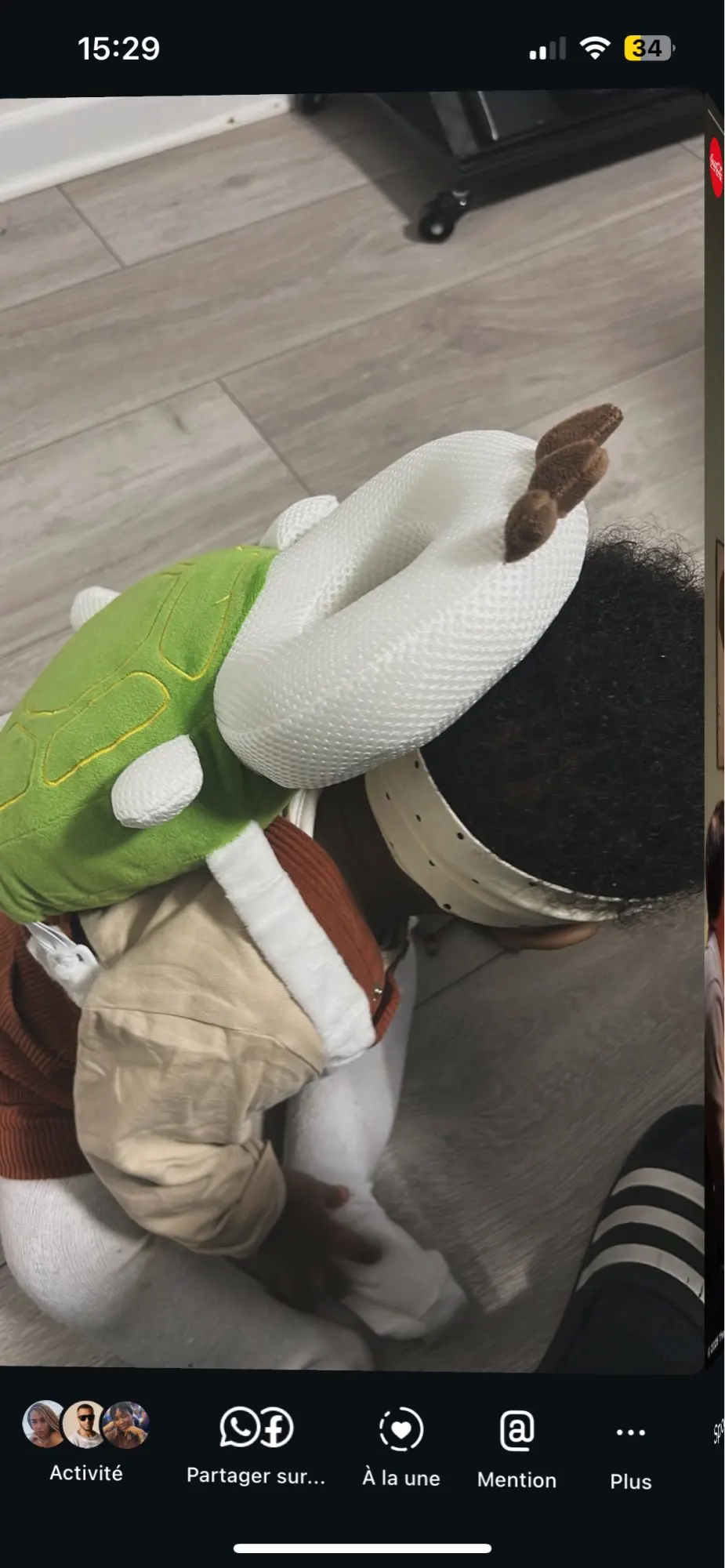
Toddler Head Protector

Toddler Head Protector

Elephant + Free Gift
$34.99
Skip to product information
Toddler Head Protector
1/8

Aspyre Picks · Head Protector

Let them wobble

Walking is built through repetition and repetition means falling. 

This soft ring cushions the backward bumps during supervised floor play, so you can stop hovering and let them practise.

The pillows are ergonomically designed for children, fun animal characters in cozy plush fabric doubles as soft toys.

Specifications:
Material: Crystal velvet+PP cotton
Size: 33*19cm

Package Content:
1 x Protection Pad

1 x Free Gift


$34.99

BEST VALUE

Buy 2 and save 37%

Color

Under 200g

Light enough they forget it

4-36 months

Straps and clips adjust

3D mesh back

Breathable, no overheating

Wash cold

Air dry, keeps its loft

WHY THIS ONE

They pull themselves up before they can catch
themselves.

Protective extension, the reflex that throws a hand out to break a fall, arrives in a fixed order. Forwards at five to six months. Sideways at seven to eight. Backwards last, at nine to ten.

Most babies pull themselves to standing at around eight months. So for a few weeks there is a real gap: they can get upright, and they cannot yet catch themselves going the one direction they are most likely to go.

This is not a reason to panic. Researchers at Purdue's Motor Development Lab recorded 39 thirteen-month-olds across twenty minutes of free play and counted roughly 250 falls, almost none of which produced tears, and none of which stopped the child getting straight back up. Falling is ordinary. It is also, briefly, unpadded.

Claxton, L., Thompson, P., & Shalit, E. Motor Development Lab, Purdue University, 2025. · Adolph, K. E. et al. (2012).

WHAT IT ACTUALLY TEACHES

Six honest jobs, one cushion, no promises about injury

Not all at once. Each of these matters at a different point between four months and three years, which is why the useful window is longer than it looks. Nothing here is a claim that this prevents injury — it does not, and the sixth card is the one most brands leave out.

From 4 months

Softens the sitting topple

A newly independent sitter has no backwards protective reflex at all yet. When they overbalance, they go straight down with nothing behind them. The ring meets the floor before the back of the head does.

From 6 months

Keeps floor time on the floor

Hard flat surfaces give better feedback for crawling than deep pile, which swallows hands and knees. Parents who trust the landing leave babies on the good surface for longer.

From 8 months

Covers the pull-to-stand gap

The riskiest few weeks are the ones where a baby can get to standing but cannot yet put a hand back to catch a fall. This is the window the product exists for.

From 10 months

Lets you sit down

Walking is built through repetition, around 2,368 steps and 17 falls in an hour of free play. Hovering within arm's reach quietly reduces the number of those a baby takes on their own.

From 12 months

Adds nothing to the gait

Under 200 grams, carried low on the back rather than high on the head. Light enough that it does not shift their centre of gravity or teach them to walk leaning forward.

From 18 months

Stops being necessary

Once a child is walking confidently and catching themselves in every direction, this has done its job. Most parents retire it somewhere between eighteen months and two years. It is not meant to be permanent.

HOW TO PLAY

Three ways to play it this week

01

Put it on during something good

Not as an event. Clip it on while they are already absorbed in a favourite toy or activity, and it barely registers. Babies who meet it as a standalone occasion are far more likely to object to it. Most stop noticing it by the third day.

02

Then actually sit down

Put the duck on the wrong barn. Try the blue key in the red lock. Let them correct you. Being the one who knows better is enormously motivating from about two, and it turns a matching task into a conversation.

03

Take it off the moment they slow down

This is the part that does the work. Move to the couch, or the other side of the room, and let them cross the floor without a hand hovering behind them. The protector is not really for the baby — it is the permission you needed to stop shadowing them.

BEFORE YOU BUY

Frequently asked questions

Is it safe for an 4 month old?

Only once they are sitting independently, and only awake and supervised. Below that, or if they are not yet sitting on their own, wait. At under 200 grams it sits well below the weight where added mass changes a baby's balance, for context, that is lighter than a full nappy and the weight sits low on the back rather than high on the head.

How big is it?

33 × 19 × 6 cm, or roughly 13 × 7.5 × 2.4 inches, and under 200 grams. The elastic shoulder straps and the front chest clip both adjust, so one size covers the whole four to thirty-six month window.

What is it made of and how do I clean it?

Crystal velvet outer brushed on both sides, a 3D breathable mesh back panel so air moves between the cushion and their back, and a high-loft PP cotton filling. Machine wash cold on a gentle cycle and air dry flat. Skip the dryer, heat compresses the filling and it will not recover its loft. Full drying takes about a day, which is the most common reason parents wish they had bought two.

Is it worth buying this early?

That depends on how you feel about buying ahead. At eighteen months roughly half the set is genuinely usable, the train, the barns and the animals, and the other half is waiting. By three all of it is in play. By five it has become a storytelling toy rather than a counting one. So it is three and a half years of use from one box, but the first year is the least of it. If you want everything working on day one, buy it at two.

Shipping and returns

Free worldwide shipping, dispatched within 1 to 2 business days. Typical delivery is 7 to 12 business days depending on your country. If it is not right, contact us within 30 days for a full refund.

EVIDENCE-BASED EARLY DEVELOPMENT

What if you're missing
the science behind your
child's best start?

The first five years shape more than any that follow — and
most parents never see the research behind them. We turn
epigenetics, neuroscience, and decades of longitudinal
studies into calm, usable guidance you can start today. No
fear, no guilt, no single right way.