



WHY THIS ONE
The tablet is not
the problem. It is the
only thing in the bag.
Nobody hands a two year old a screen in a waiting room because they believe it is good for them. They hand it over because it is flat, it is already in the bag, and it reliably buys twenty minutes. Almost nothing else in the house does all three at once.
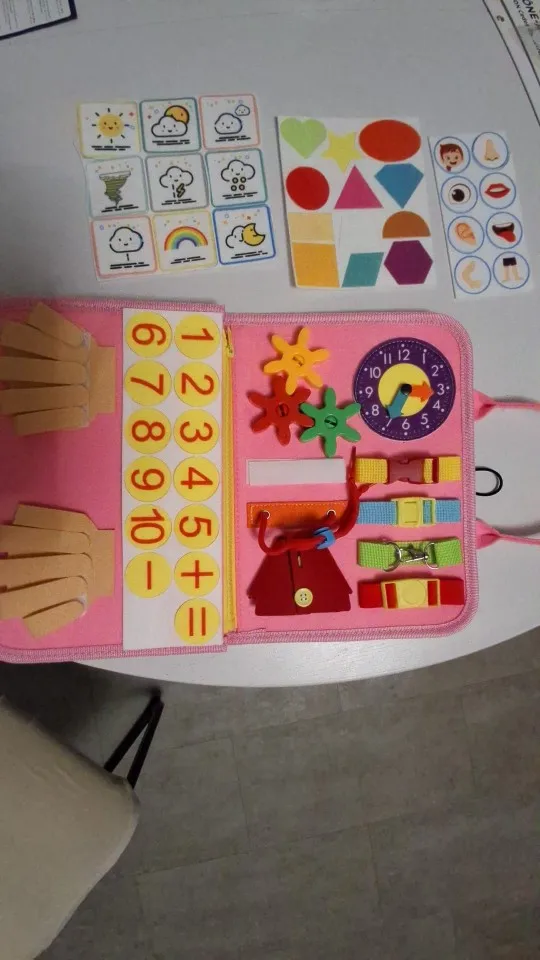
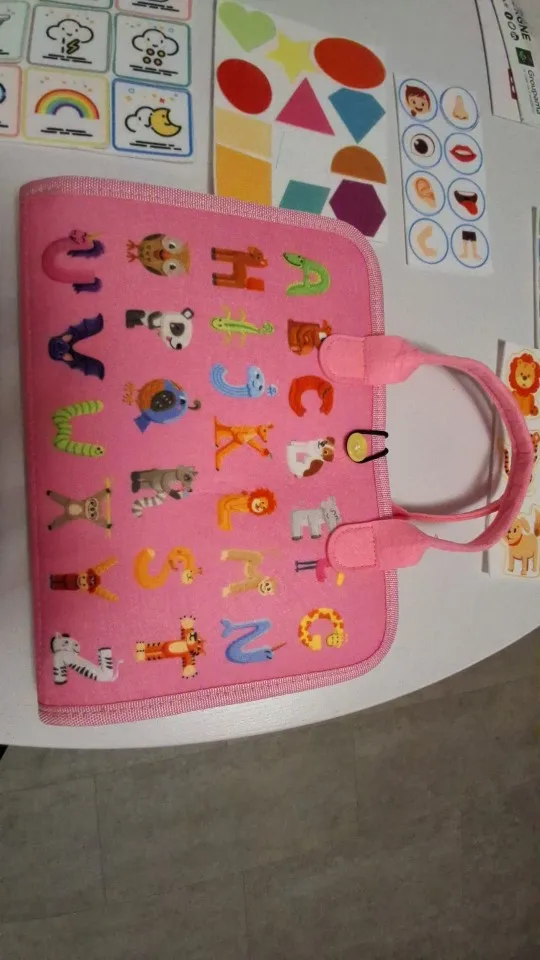
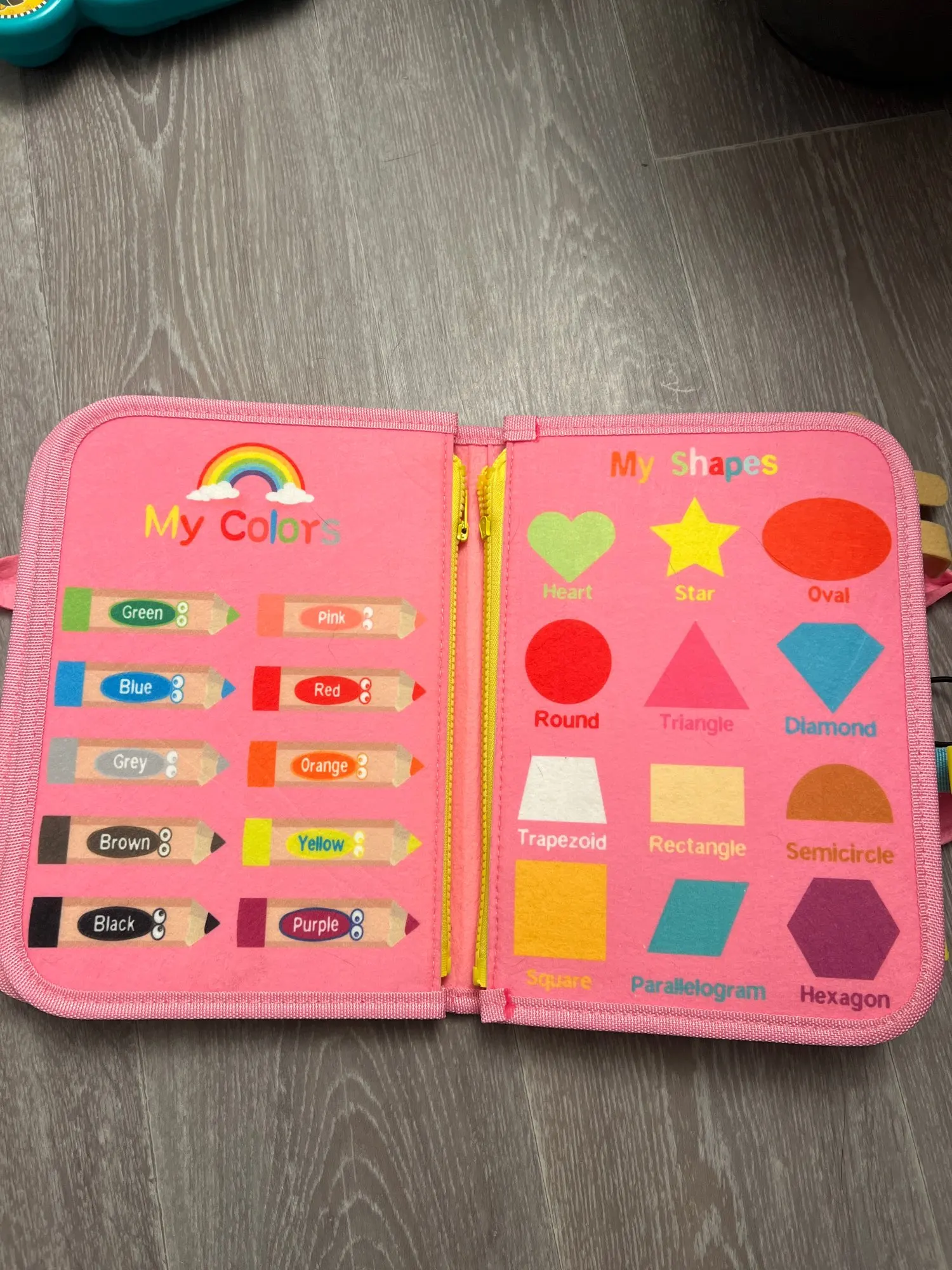
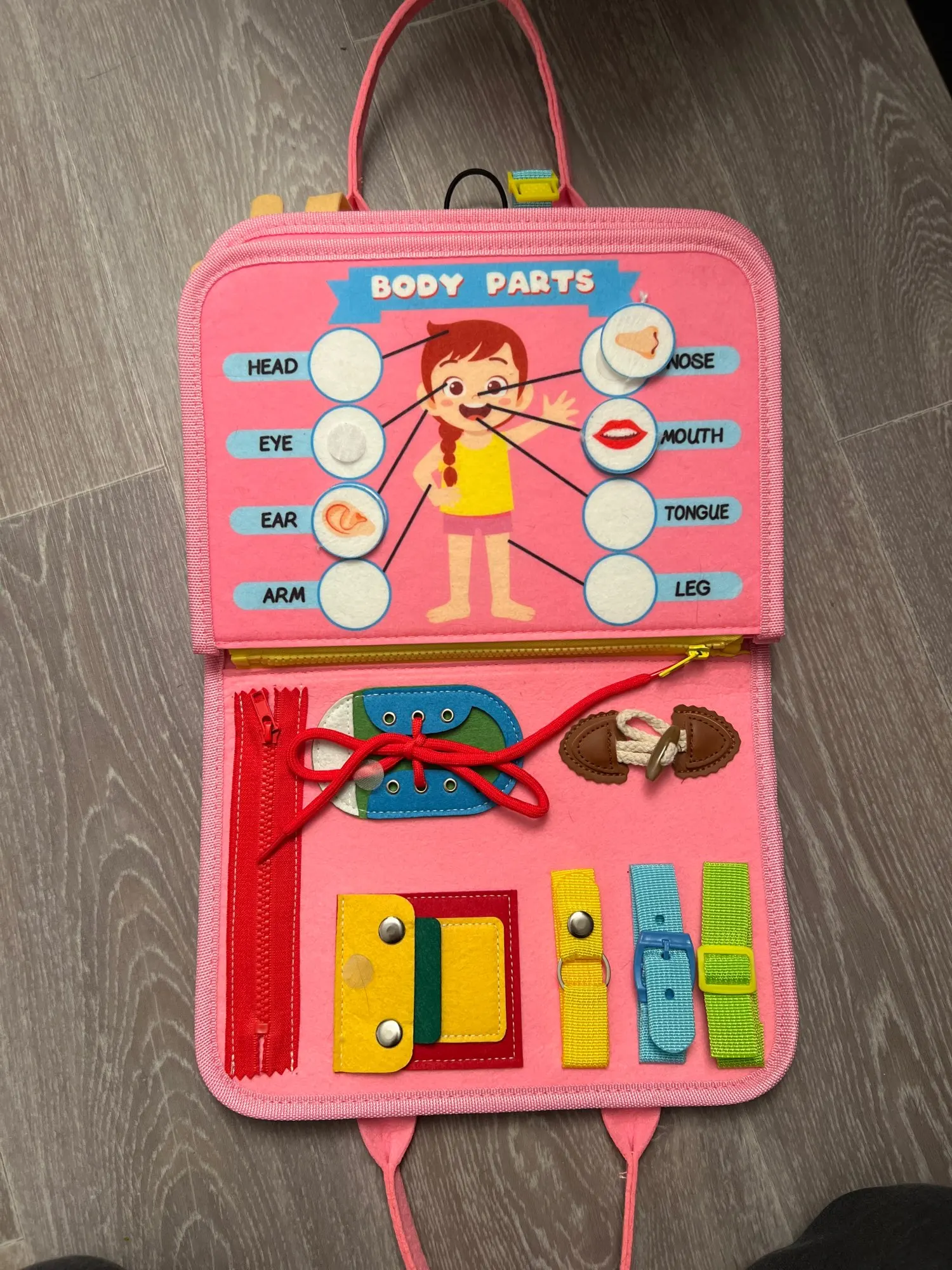
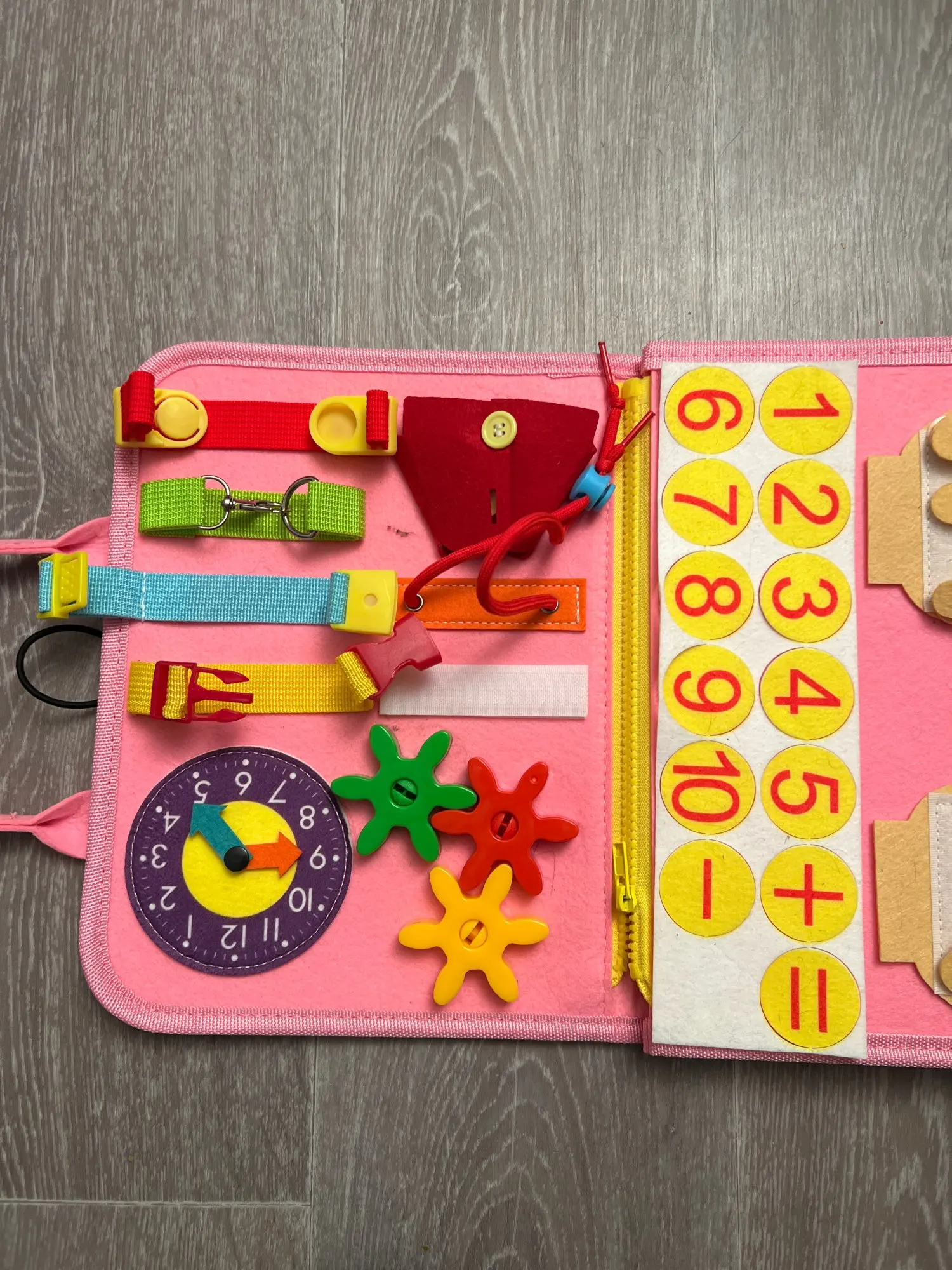
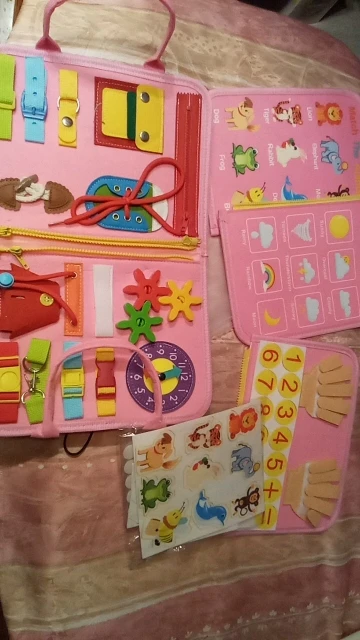
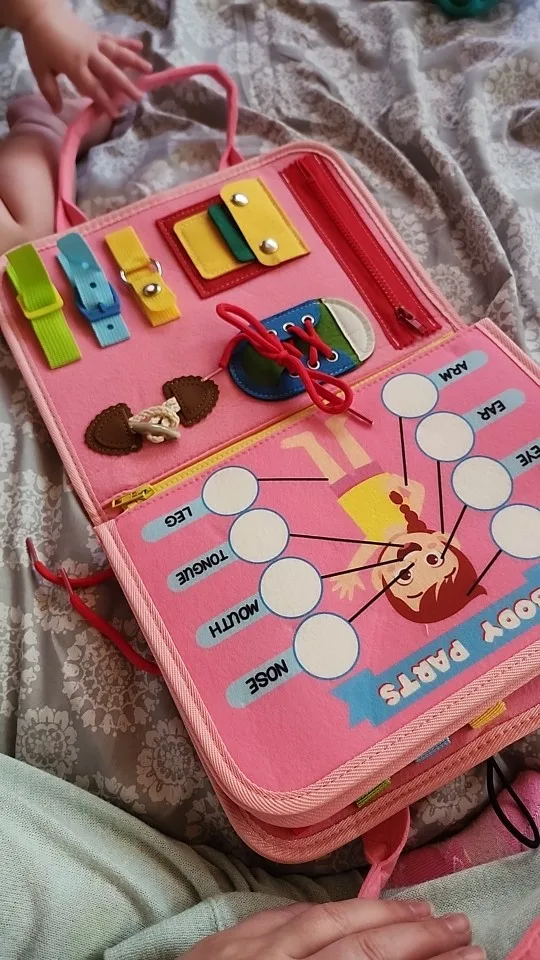
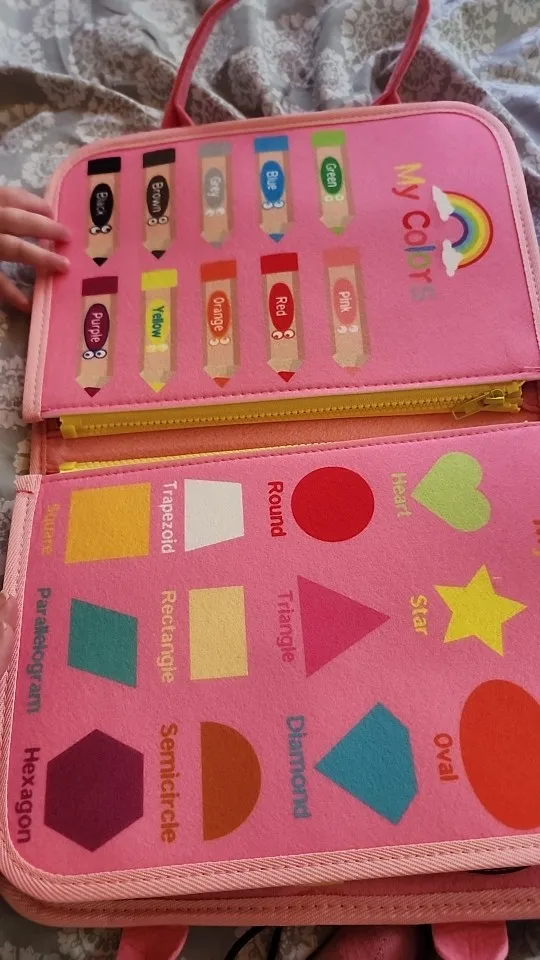
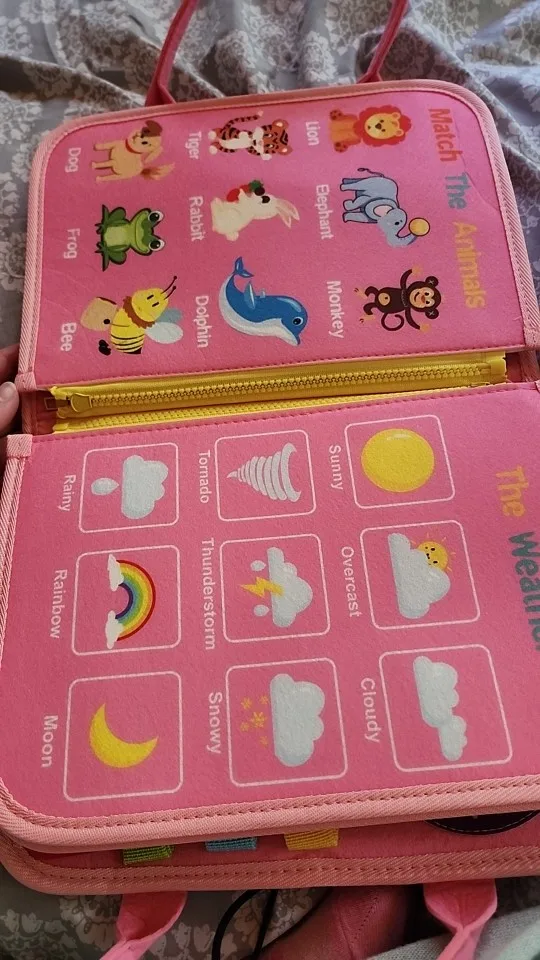
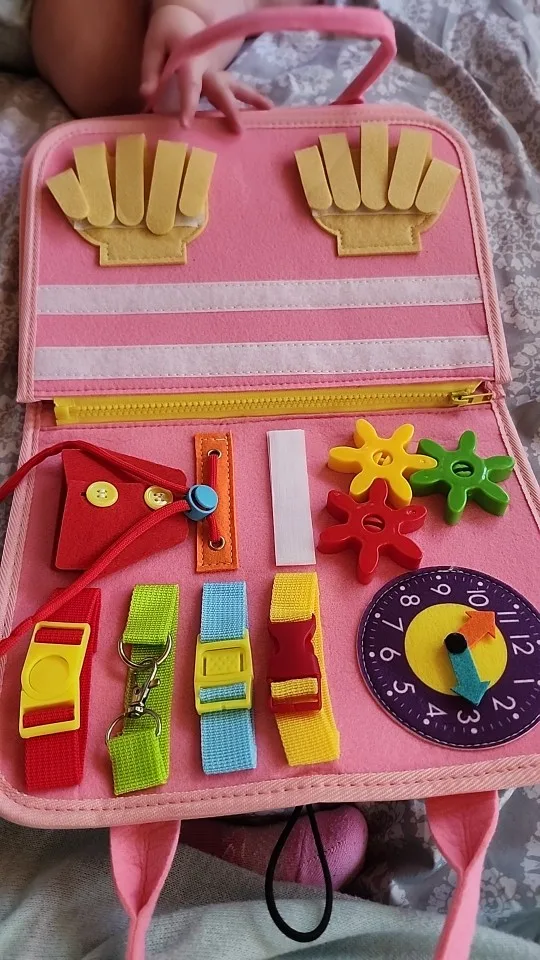
So the useful question is not whether screens are bad for children. It is what could realistically win on those terms. It has to fold. It has to be quiet. It has to survive being sat on in a bag. And it has to hold a child's attention without an adult running it. A busy book is one of the very few physical objects that manages all four.
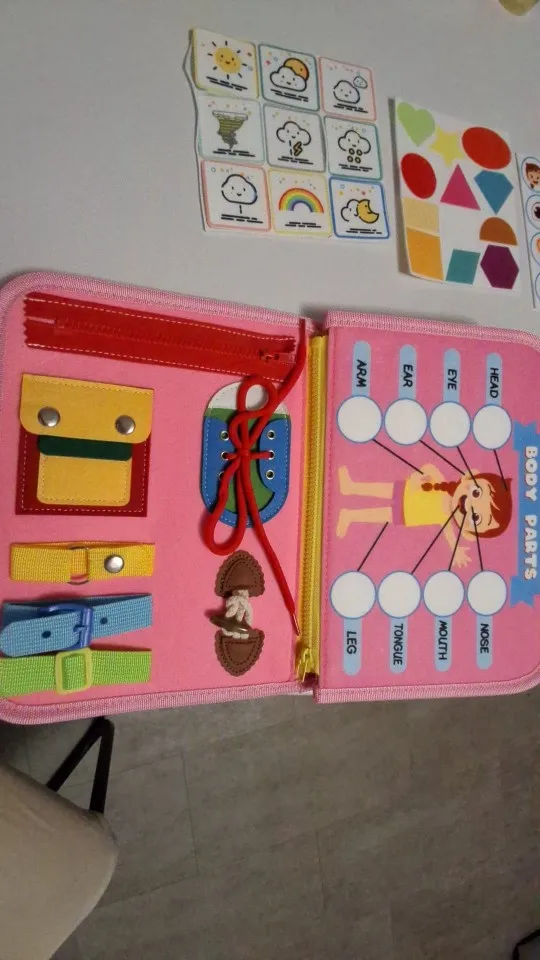
For this age the trade is a good one. Under about two and a half, children learn markedly less from a screen than from the same thing demonstrated in front of them, an effect researchers have measured repeatedly and named the video deficit. Their hands are still the instrument. A zip resists. A buckle clicks. A lace goes wrong and has to be started again. A glass surface returns the same swipe for everything on it.
Anderson, D. R., and Pempek, T. A. (2005). Television and Very Young Children. American Behavioral Scientist, 48(5), 505-522. · Barr, R. (2010). Transfer of Learning Between 2D and 3D Sources During Infancy. Developmental Review, 30(2), 128-154. · World Health Organization (2019). Guidelines on Physical Activity, Sedentary Behaviour and Sleep for Children Under 5 Years of Age.

